Working Mothers
Dads in Australia: Their changing role
Not too long after man first walked on the Moon, I thumbed a ride with a tile salesman who couldn't wait to get home to spend time with his kid.
Working parents: what children think
Working parents fret about the hours they spend away from their children. But how do the kids feel about it? Amanda Woodard reports.
When is Daddy coming home?
Fathers are finding smarter ways to mix work and family life, writes Kath Lockett. Making the change from working full time - or longer than full time - has been a difficult but rewarding experience for men.
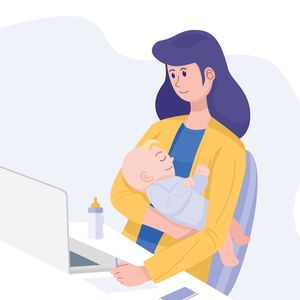
Working mums don't cuddle their babies less
Babies are not missing out on cuddles if their mothers work - even full-time, according to a study that charts the typical day of Australian infants.
Women stretched to snapping point
The Howard government's family policies left a legacy of stressed, overworked parents and set gender equity back a decade, a new study shows.
From baby to boardroom
Ann-Marie Egger realised it was time for her to go back to work when she noticed she was doing more than her fair share of tuck-shop duty. Help is at hand for mothers who want to get back to the office, writes Kim Kind.
Do you really need to work?
How many of we working mothers have been asked this question? ‘Oh, but do you really need to work or will you just use the money to buy more stuff you don’t need?’ Or ‘Maybe if you lived more simply, you wouldn’t have to.’
Practical tips for working Mums
Essential Baby members and full-time working mothers share their tips on how they juggle work, children, and getting everyone up and out the door every morning. On time!
Having a baby: Financial considerations
It is estimated that you will spend up to 20% of your income on child related expenses, regardless of how much you earn. As your baby grows, you will find the costs continue to increase and of course your commitment will not end for many years to come. Many families will drop one income completely for a period of time while others will have the added costs of childcare if both partners return to work.
Pregnancy and work: Your current leave entitlements
In Australia, both men and women are entitled to 52 weeks of unpaid parental leave if they are the primary caregiver for a newborn and have been employed by their company for a year. This basically means that your employer is required to keep your job open for you for up to 52 weeks if you indicate you wish to return to work after parental leave. While it is more common for women to take maternity leave, increasingly men are taking paternity leave allowing their wives to return to the workforce.
The Essential Baby guide to the Federal Budget
How has the Budget affected you? Find all you need to know about parental leave, the baby bonus, family tax benefits, child care rebates and more in Essential Baby's comprehensive guide to the Federal Budget.
Beware the bogus baby bonus
Before you get excited about the prospect of paid parental leave, consider this: you may actually be worse off as a result.
Leave for new dads a step still too far
The Productivity Commission wanted to give fathers two weeks' paid leave with their new babies - but that idea is on the backburner as the Government looks to contain the cost of its 2009-10 budget spending.
Family tax benefit threshold frozen till 2012
Fewer families will be eligible for family tax benefits and the baby bonus as the Federal Government tries to claw back the amount it hands out to people with children. From 1 July the upper income threshold for family tax benefits A and B as well as the baby bonus will remain as they are until July 2012.
Family payments tightened in welfare crackdown
More than 90,000 higher-income families will lose family payments over the next three years as the Government cracks down harder on middle-class welfare by freezing its means-test thresholds until 2012.
Midwives, rural medical staff gain
More power for midwives and a $134 million program to attract health professionals to regional and rural areas are the big surprises in the health budget.
Medicare 'rebalance' hits higher income earners
Benefits for the well-off have been cut and a razor has been taken to doctors' Medicare payments in what the Government has called a "rebalancing" of Medicare and private health insurance.
Paternity payment spared the axe
The budget will aim to encourage women to stay in the workforce by promising them paid maternity leave and sparing the child-care rebate from Wayne Swan's axe. From January 1, 2011, the primary carer of a newborn baby will receive $544 a week, the minimum wage, to stay home for 18 weeks.
Proposed paid parental leave diminished
The plan to grant 18 weeks' paid parental leave to more than 100,000 women annually will come in a diminished form. Key measures proposed by the Productivity Commission will be either cut back or left out completely in a bid to save nearly $200 million a year.
Rudd Government delays paid parental scheme to 2011
The Federal government has delayed their 2007 election promise of a paid parental leave scheme for another 18 months, and restricted it to primary carers earning less that $150,000. On Essential Baby, working mothers are questioning the delay as well as the means testing.
A modest promise to keep
The paid parental leave scheme is the budget's small bright, shiny button. For many women and for the union movement, it is a symbol as well as a tangible outcome of lobbying. But at $260 million a year, it is modest, and substantially cheaper than the original Productivity Commission $450 million proposal. It also won't start until 2011, which reinforces the point that for now it is a feel-good measure.
Business groups concerned over cost of parental leave
The Australian Chamber of Commerce and Industry has called on Labor to compensate companies for administering the scheme which offers primary carers earning less than $150,000 a year 18 weeks of post-natal leave paid at the minimum wage.
Maternity leave not available to most
Fewer than a quarter of enterprise agreements have paid maternity leave arrangements and even fewer have paternity leave provisions, a study of 1865 registered agreements has found. Research from the University of Sydney found that two industries with high numbers of female employees - hospitality and retail - had the smallest number of agreements with parental leave provisions.
Study shows benefits of early maternity leave
Women who start maternity leave at least a month before their baby is born are less likely to have a caesarean delivery according to US researchers, who also found mothers who delay their return to work breastfeed for longer. The findings, in two separate studies from the University of California, Berkeley, add weight to the push for extended paid maternity leave.