Before we begin, I should alert you that this story ends with a baby.
It ends with the very baby who, deemed an impossibility, started my family on a journey that began with slammed doors and cold shoulders and without any notion that there would be a pay-off for all of the tears at the end.
Infertility is one of those words that conjures up more questions than it answers. No one wants to hear it, or upon hearing it, knows what to say.
In Australia, one in six couples is infertile, with the odds narrowing to one in three for women over 35. Assisted reproductive technologies such as IVF now account for more than 1 per cent of all births in Australia, but how much do those of us with only a cursory relationship to the world of blocked tubes or lazy sperm comprehend?
Hailey and Robert were married when she was 19, he was 32, and there was plenty of time for children.
Hailey is the eldest of three girls in our family and while less than three years separate us, we were in different hemispheres growing up. At 19, she wanted a red KitchenAid and Nigella DVDs; I wanted credit cards and ancient cobblestones in a European city. As it turns out, she also wanted a baby.
In February 2008, after four years of trying for a baby, the verdict was handed down. Hailey is matter-of-fact as she recalls her obstetrician's words. "He said to me that day 'You will be unable to conceive without IVF... you have no chance of falling pregnant'," she remembers. Robert offers quietly: "After that we lost hope."
Luke and Michelle faced the same verdict, for very different reasons. Michelle suffered from vaginismus, a condition which prevented her from having sex.
Luke says his Christian faith helped him to cope: "You know that it's all under control which makes it less stressful... the despair isn't as deep."
For our family, it was the forever aspect of Hailey and Robert's prognosis that hurt the most.
This was not a short-term sadness but one that would always be there, manifesting itself in new and ugly ways: when it was my turn to have children, or when my grandmother passed away never having known a great-grandchild.
For Hailey and Robert, the endless stream of questions from friends and perfect strangers started to grate.
Hailey recalls: "I was always amazed by what people felt they could ask; quite personal questions on very slender relationships with us. It was almost like we were a bit defective because we hadn't produced a child. I would think 'Are we not enough on our own?' "
For Andrew and Virginia, who struggled for six years to conceive, people were even less tactful. Andrew recalls being asked "are you just materialistic or can't you have children?" while Virginia walked away from countless conversations in tears.
Luke and Michelle also recall the advice to "fix your infertility" they received from clueless, though well-meaning acquaintances.
This begs the question, why as a society do we want children in the first place? And why do we consider it our right to interrogate those who, by choice or circumstance, fail to deliver?
For Luke and Michelle, the desire for children was innate and hard to quantify. Having been a mother figure to her siblings, Michelle notes: "I always assumed when I got married I'd have kids, so when things weren't working I thought 'What am I going to do with myself?' "
The decision whether to wait and keep hoping or undertake programs such as IVF is often more complicated in religious circles.
Luke and Michelle considered the technology, Hailey and Robert decided against it and Andrew and Virginia used a method known as GIFT to conceive their three children.
For Hailey and Robert, the more they explored the IVF process, the more they became convinced it wasn't the right choice for them. Hailey recalls coming across internet chatrooms where women seemed to identify themselves by how many IVF cycles they'd endured.
"I felt like I could have become a fruit-loop blogging sadly onto the web in the middle of the night and actually forgetting all the really good things in my life," she says.
There was also the matter of the unused embryos, something Hailey and Robert could not reconcile.
It was the realisation they would seek professional help for any other medical issue that convinced Andrew and Virginia to consider the GIFT method. The process is different to IVF in that a "super sperm" is injected into the fallopian tubes along with an egg, resulting in fertilisation occurring within the womb.
Using the method, Virginia gave birth to Courtney in 1992, and twins Sophie and Rachael followed in 1999.
With the help of counselling and remedial aids, Michelle overcame her medical condition.
She recently gave birth to son Josiah Barack.
"We're very excited," Michelle says. "I have these moments where I think 'Is this actually happening? Should I be more grateful?' "
For Hailey and Robert, the road was a little longer. After the no-baby verdict they sold their house, Robert quit his job and started a landscaping business and Hailey contemplated returning to university to do her masters. It was all half-hearted, settling for second without any notion of best.
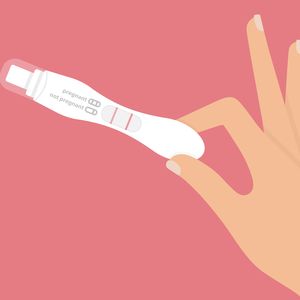
A year ago Hailey decided to use the last pregnancy test languishing in her drawer. She recalls the two lines with a smile, feeling genuinely confused because "every other time I'd done it I hoped, whereas this time I didn't even hope".
The next six weeks were a roller-coaster as the pregnancy was first thought to be ectopic, occurring inside the fallopian tubes and almost certainly doomed. Then the doctors found an egg sac in the uterus, but it looked empty and they could not detect a heartbeat. At six weeks, Hailey and Robert saw their unborn child. Hailey was "gobsmacked".
While each of the couple's infertility is behind them, the memories of their struggles are still raw. They grimace knowingly when I ask how they would support others grappling with infertility.
Luke suggests: "Just empathising, really... it's not something where you can provide false hope or false positivism."
This sentiment is echoed by Virginia, along with the suggestion not to judge or identify couples by their infertility. "I can still remember being introduced as 'This is Andrew and Virginia, they can't have children,' " she says.
For Hailey and Robert there is no scientific way to explain Ewan John's conception. Their obstetrician may have laughed at Hailey's suggestion "I prayed and God answered my prayer" but he was unable to provide a medical explanation and still cannot.
Ewan John has already performed the greatest miracle, just by being alive. This baby who could never be, defiantly is.
"It was almost like we were a bit defective because we hadn't produced a child."
The IVF option
- Treatment for infertility and IVF in Newcastle is shared between Hunter IVF, operating out of Newcastle Private Hospital, and Sydney IVF, through Lingard Private Hospital.
- Any assisted conception method where fertilisation takes place outside the body is a form of IVF.
- Originally developed to overcome infertility caused by blocked or absent fallopian tubes, IVF is now used to treat other reproductive problems such as irregular ovulation, low sperm count and unexplained infertility.
- IVF involves embryo transfers of fresh or frozen eggs which are fertilised in the laboratory and transferred into a woman’s uterus.
- Sydney IVF Newcastle’s statistics indicate that women under 38 have a 45.9 per cent chance of falling pregnant per fresh embryo transfer. There is a 25.9 per cent chance for women over 38.
- With frozen or vitrified embryos, the statistics are 23.2 per cent for women under 38 and 20.6 per cent for woman over 38.
- Assisted conception is usually considered after 12 months of trying for a baby or six months for women over the age of 35.
Discuss this topic in the Assisted Conception forums.